
Quick answer
Departures run from 29979 E Knik River Rd in Palmer, with the site open 07:00–19:00 daily and no entrance fee — 0 USD — since tour costs are handled separately. Riders consistently rate morning and midday flights highest, because clearer weather and stable light favour those departures. The recurring caveat is cancellation: low cloud over the icefall grounds aircraft regardless of season.
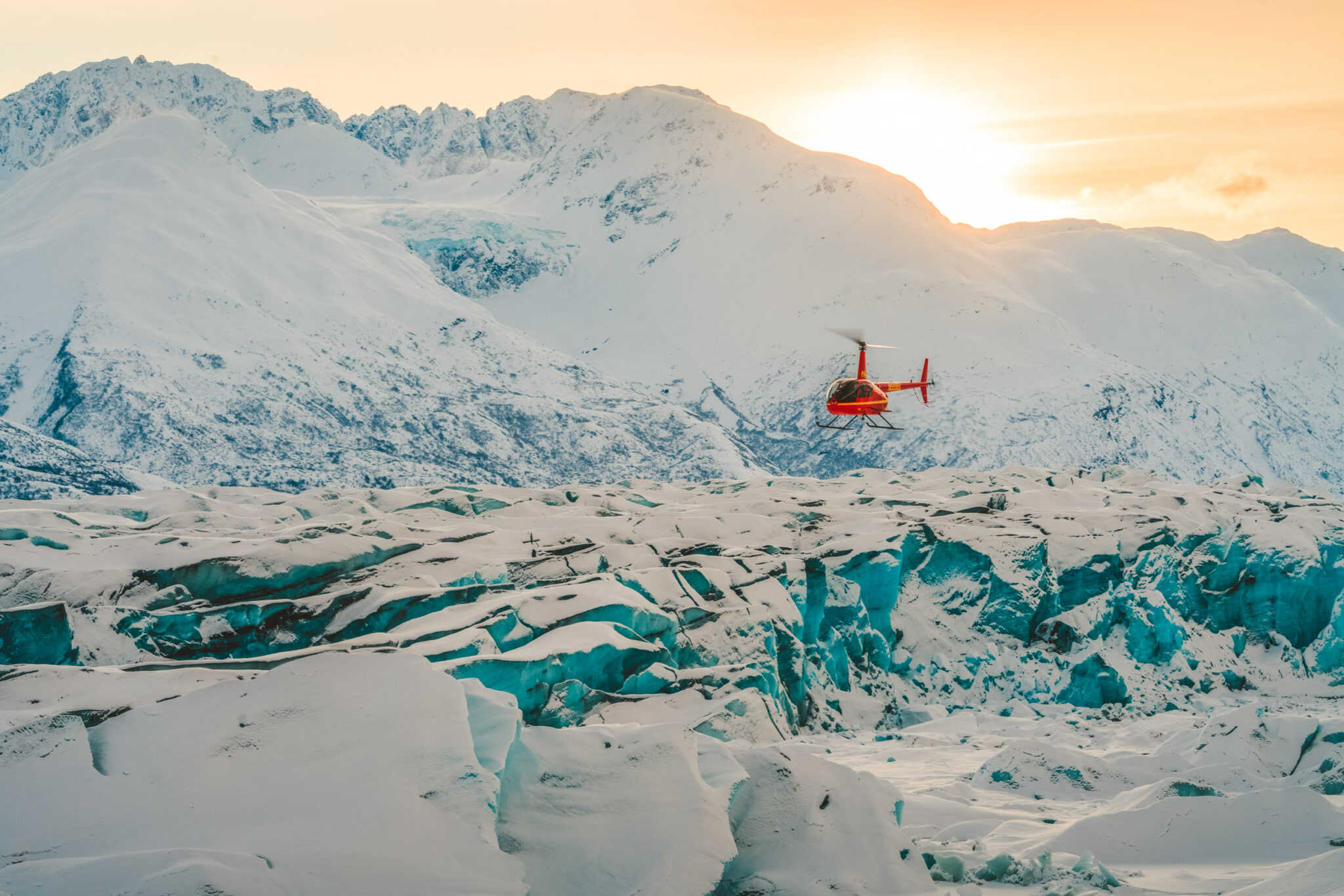
Knik Glacier is not static scenery. It is a surging glacier, one of the few in Alaska known to advance in sudden pulses, and it once dammed the Knik River hard enough to create Lake George, which released catastrophic outburst floods almost annually until the mid-twentieth century. Passengers who read that history before boarding tend to describe the flight differently afterwards: less as a scenic loop, more as a look at a landform still visibly rearranging itself. Any honest knik glacier helicopter tour review starts there, because the terrain below the skids is doing something. What riders actually encounter is a short transit and a long look. Departures leave from the Knik River Road corridor near Palmer, cross braided glacial outwash and cottonwood flats, then climb toward the terminal face and the icefall behind it. Reports emphasise the scale problem — the medial moraines read as thin grey lines from altitude until a landing supplies a reference point. Where a glacier landing is included, the aircraft sets down on firm ice or a lateral moraine bench, engines idling, and passengers walk a marked area to inspect meltwater channels, seracs, and the blue compressive ice that photographs poorly from inside a cabin. Comparisons with a fixed-wing Knik River flightseeing trip come up often; the helicopter's advantage is the stop, not the speed. The variable that dominates feedback is meteorological, not operational. Chugach Mountain weather closes in fast, and a socked-in valley cancels flights that looked viable an hour earlier. Experienced visitors build a buffer day into an Anchorage or Matanuska Valley itinerary rather than booking a single slot before a cruise departure or flight home. Rescheduling is normally straightforward; missing the glacier entirely because there was no second window is the complaint that recurs. Used properly, a knik glacier helicopter tour review is a calibration tool rather than a verdict. It sets expectations about flight duration, headset audio quality, seating rotation, and how much time boots actually spend on ice. The specifics that change with the calendar — daily hours, the recommended arrival window, what to wear on the ice, and how to reach the staging area from the Glenn Highway — are handled in the dedicated sections on this page. Read those alongside the accounts here, then check current conditions directly with the operator at +1-907-980-8179 or via https://www.alaskahelicoptertours.com before committing to a date.
“The helicopter's advantage over a fixed-wing flightseeing trip is the stop, not the speed.”
When to Book Your Knik Glacier Helicopter Tour Review Experience
The best arrival window for a Knik Glacier helicopter tour is 07:00–18:00, as clearer weather and stable light conditions favor morning and midday departures. Booking within this timeframe increases the probability of favorable flight conditions.
May to June
Low to moderateCool, 45°F to 60°F; stable skies.
Mild temperatures and longer daylight hours provide consistent visibility for glacier landings.
July to August
HighestWarmer, 55°F to 70°F; periodic rain.
Peak season experiences higher visitor volume and more variable weather patterns.
September to October
LowChilly, 35°F to 50°F; calm winds.
Autumn offers crisp air and the potential for early-season snow against the ice.
Weekday mornings
Minimal—
Selecting an early weekday slot minimizes crowd density and allows for calmer atmospheric conditions.
Verdict: The most favorable conditions occur during weekday mornings in May or September when weather remains stable and tourist volume is lower.
Daily Operating Schedule for a Knik Glacier Helicopter Tour Review
The operating schedule for Knik Glacier helicopter tours remains consistent throughout the week to accommodate visitors. Tours are available daily from early morning through the evening.
| Monday | 07:00–19:00 | |
|---|---|---|
| Tuesday | 07:00–19:00 | |
| Wednesday | 07:00–19:00 | |
| Thursday | 07:00–19:00 | |
| Friday | 07:00–19:00 | |
| Saturday | 07:00–19:00 | |
| Sunday | 07:00–19:00 |
Navigating to Your Knik Glacier Helicopter Tour Review Departure Point
The departure point for Knik Glacier helicopter tours is located at 29979 E Knik River Rd, Palmer, AK 99645, USA. The most direct approach is via the Glenn Highway, followed by a turn onto Knik River Road.
Glenn Highway to Knik River Road
Private transfer to 29979 E Knik River Rd
Pre-Departure Preparation for Your Knik Glacier Helicopter Tour Review
A few decisions made in advance — booking, ID, footwear, and layers — shape how comfortable the flight and any glacier landing feel.
-
Reserve your flight weeks ahead — Summer departures from the Knik River Road base fill quickly, especially for landing tours.
-
Confirm passenger weights at booking — Operators balance the aircraft by seat, so accurate weights are collected before departure.
-
Carry photo ID and booking reference — Check-in staff verify each passenger against the manifest before the safety briefing.
-
Call ahead on questionable weather — Reach the operator at +1-907-980-8179 to check whether cloud ceilings allow flying.
-
Pack waterproof boots with grip — Glacier landings put you on wet ice and loose moraine gravel.
-
Dress in three layers — Temperatures on the ice run far colder than in Palmer, even in July.
-
Bring sunglasses, sunscreen, gloves — Snow and ice reflect strong light, and rotor wash is cold on bare hands.
-
Secure hats and loose items — Anything unsecured can blow away or be drawn toward the rotors during landing.
Key Sights During a Knik Glacier Helicopter Tour Review
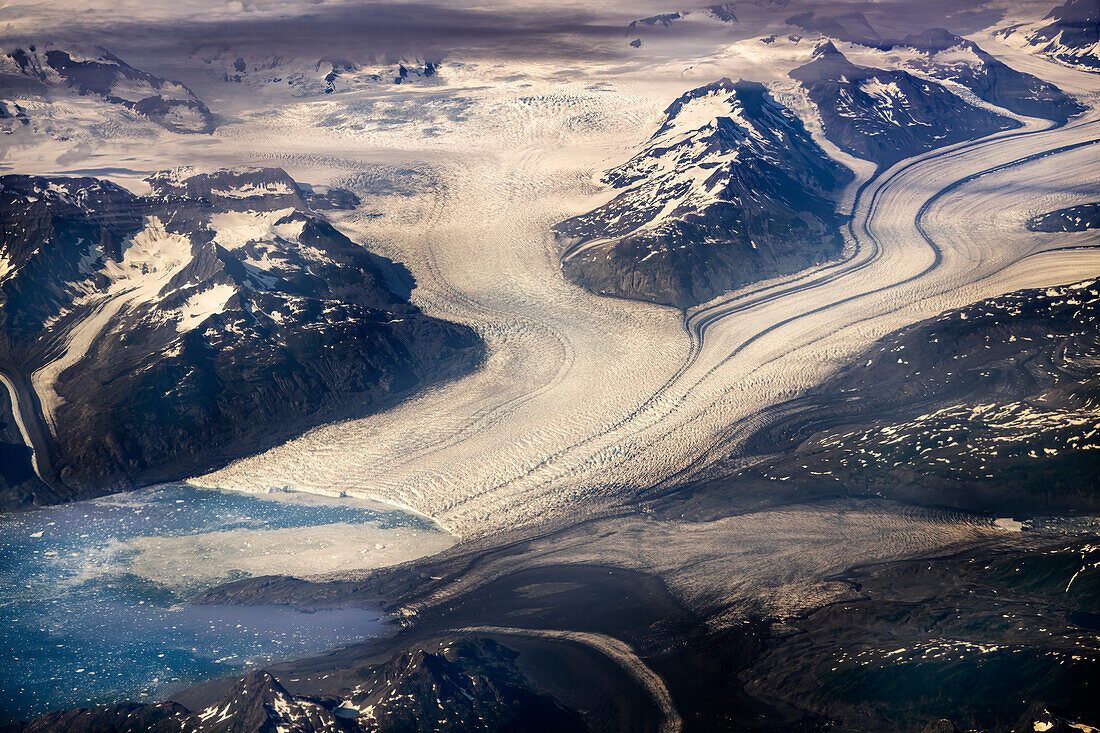
A helicopter tour over Knik Glacier offers an aerial perspective of one of Alaska's largest glaciers. Passengers observe the complex geological formations and rugged mountain terrain that define this landscape.
Chugach Mountains
The flight path traverses the jagged peaks and deep valleys of the Chugach range surrounding the glacier. These mountains provide a backdrop of exposed rock and high-altitude snowfields.
Look toward the horizon during ascent for panoramic valley views.
Meltwater Pools
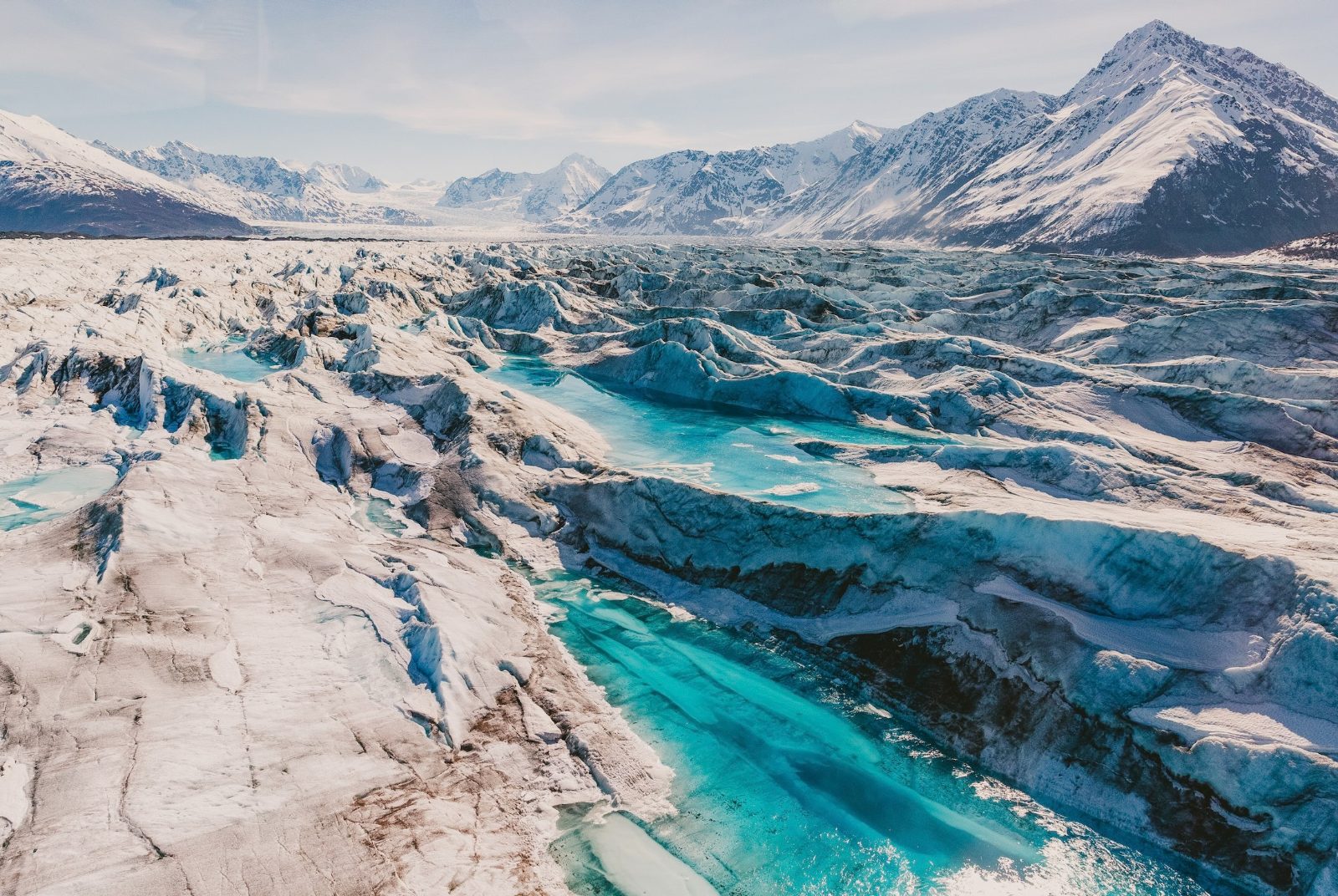
Deep blue pools form on the surface of the glacier where ice has melted into glacial depressions. These pools vary in size and clarity depending on the seasonal temperatures.
Observe the contrast between the dark blue water and white ice.
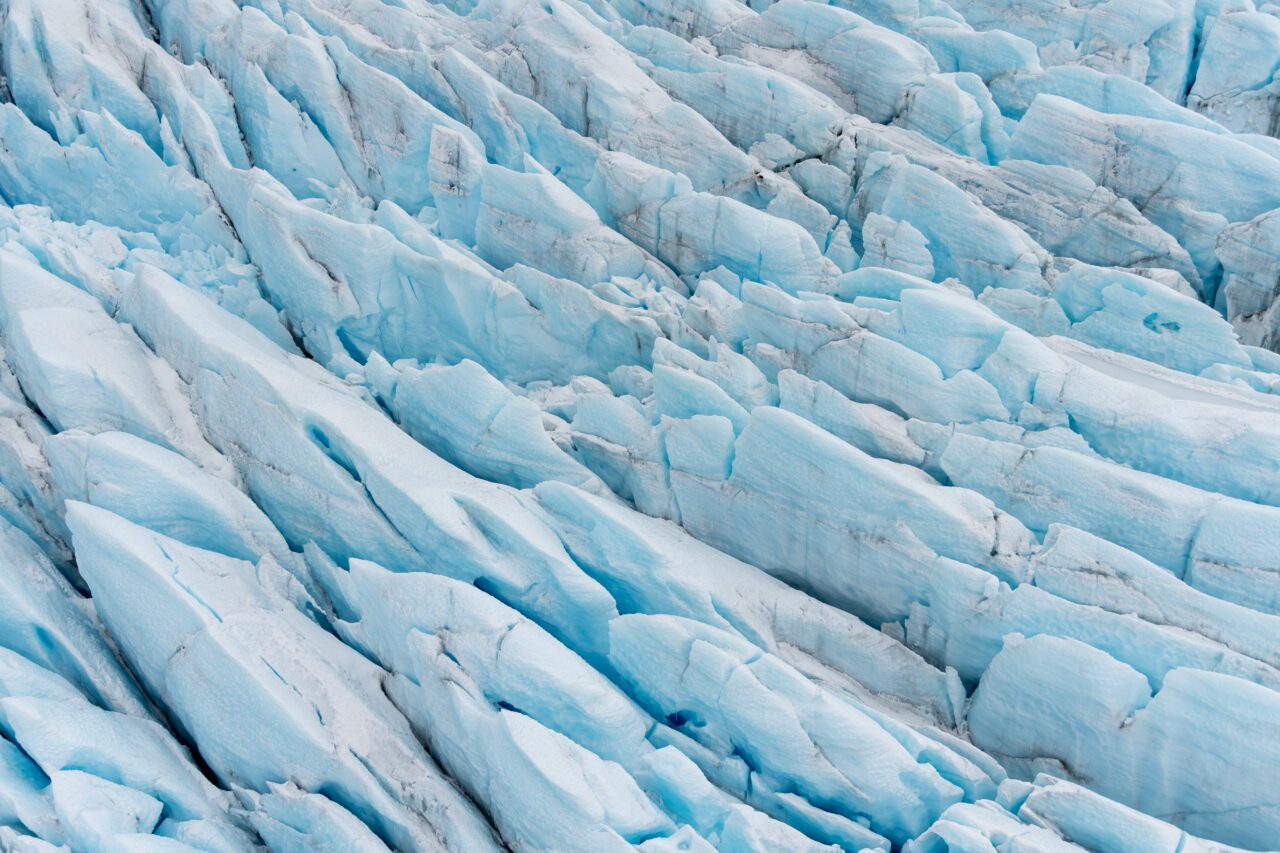
Crevasse Fields
The glacier features complex networks of crevasses caused by the movement of ice over uneven terrain. These fissures reveal the density and age of the compressed glacial ice.
Use polarizing filters to reduce glare on the ice surface.
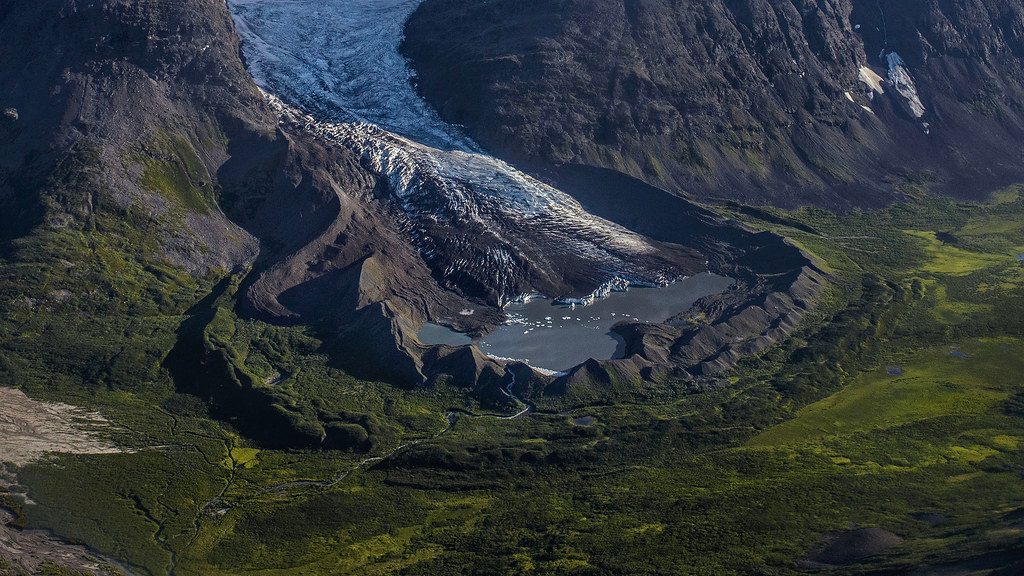
Terminal Moraine
The terminal moraine marks the leading edge of the glacier where it deposits sediment and rock debris. This area highlights the history of glacial advancement and retreat in the valley.
Watch for the color change from white ice to dark sediment.
Check availability
Frequently Asked Questions About Knik Glacier Helicopter Tour Review
Everything you need to know about knik glacier helicopter tour review